

Kimpton Engineering — "Design • Fabrication • Testing • Erection- On Time. In Budget. Beyond Expectations.”

Quality  Assurance

Quality Assurance & Fabrication Excellence at Kimpton Engineering.

An ISO-ready Quality Management System (QMS) is at the core of Kimpton Engineering’s operations. Our system ensures that every process—from design, material procurement, fabrication, welding, assembly, testing, and installation—meets both customer requirements and regulatory standards with precision and consistency.

We maintain a structured approach built around:

* A comprehensive Quality Manual defining the scope and objectives of the QMS.
* Documented Standard Operating Procedures (SOPs) for all fabrication and inspection activities .
* Periodic internal audits and management reviews to drive continual improvement .
* Corrective and Preventive Action (CAPA) systems for eliminating non-conformities at the root level .
* This framework minimizes errors, reduces material waste, enhances traceability, and strengthens overall performance—forming the foundation for ISO 9001 certification and long-term client confidence.
Welding  PQR/WPQR Process

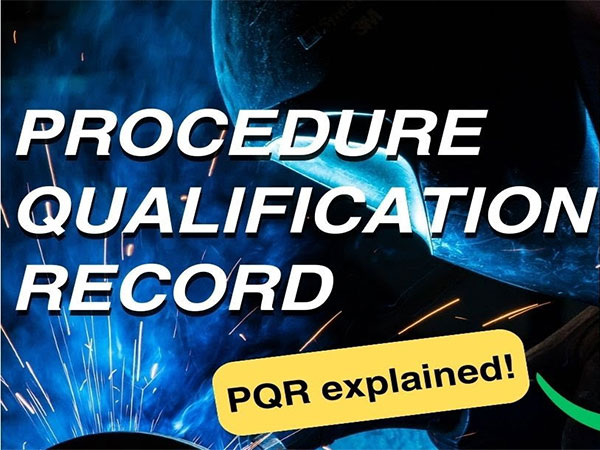
At Kimpton Engineering, welding quality is governed by rigorously controlled Procedure Qualification Records (PQRs) and Welding Procedure Specifications (WPSs) in accordance with ASME Section IX, AWS D1.1, and other relevant codes.


The WPS serves as a detailed guideline covering joint design, base materials, filler metals, preheat/interpass temperatures, welding positions, and current/voltage parameters.


A test coupon is welded following the proposed WPS and then subjected to both destructive tests (tensile, bend, macro) and non-destructive tests (visual, radiographic, ultrasonic).


Upon successful results, the PQR qualifies the WPS, confirming that production welds will meet all mechanical and metallurgical integrity requirements.


All welding is performed by qualified welders under the supervision of Certified Welding Inspectors (CWI), ensuring consistency and compliance throughout fabrication.


Non-Destructive Testing (NDT) &  Traceable Quality Assurance

The integration of Non-Destructive Testing (NDT) and Traceable Quality Assurance (QA) is vital to maintaining product reliability and compliance.


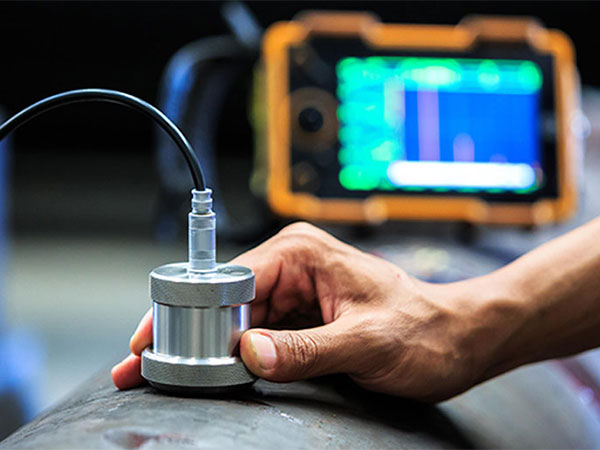
NDT Techniques: Ultrasonic Testing (UT), Magnetic Particle Testing (MPT), Radiographic Testing (RT), Liquid Penetrant Testing (LPT), and Hydrostatic Testing are applied at critical stages to detect internal or surface defects without impairing component integrity. Traceability: Every stage of production is documented—from material test certificates (MTCs) and welder qualification records to NDT reports, heat-number mapping, and final inspection dossiers. This ensures a complete, traceable quality record for each component, enabling transparency, audit readiness, and rapid root-cause analysis whenever required.

Quality   Assurance Policy

At Kimpton Engineering, quality is not an act—it is our culture. Our Quality Assurance Policy is built on the following principles:

1. Customer Focus: Understand, meet, and exceed customer expectations through reliable and cost-effective engineering solutions.

2. Compliance: Adhere strictly to ASME, TEMA, API, and ISO 9001 standards in all fabrication and inspection activities.

3. Continuous Improvement: Enhance quality and efficiency through regular audits, training, and feedback-driven corrective actions.

4. Employee Competence: Empower and train our workforce to uphold the highest technical and safety standards.

5. Process Control : Maintain documented procedures and calibration systems to ensure repeatable quality in every operation.

6. Safety & Sustainability: Integrate safety and environmental responsibility into all quality practices.

Our Commitment: To deliver products and services that consistently conform to international standards of quality, ensuring durability, reliability, and total client satisfaction — On Time. In Budget. Beyond Expectations.